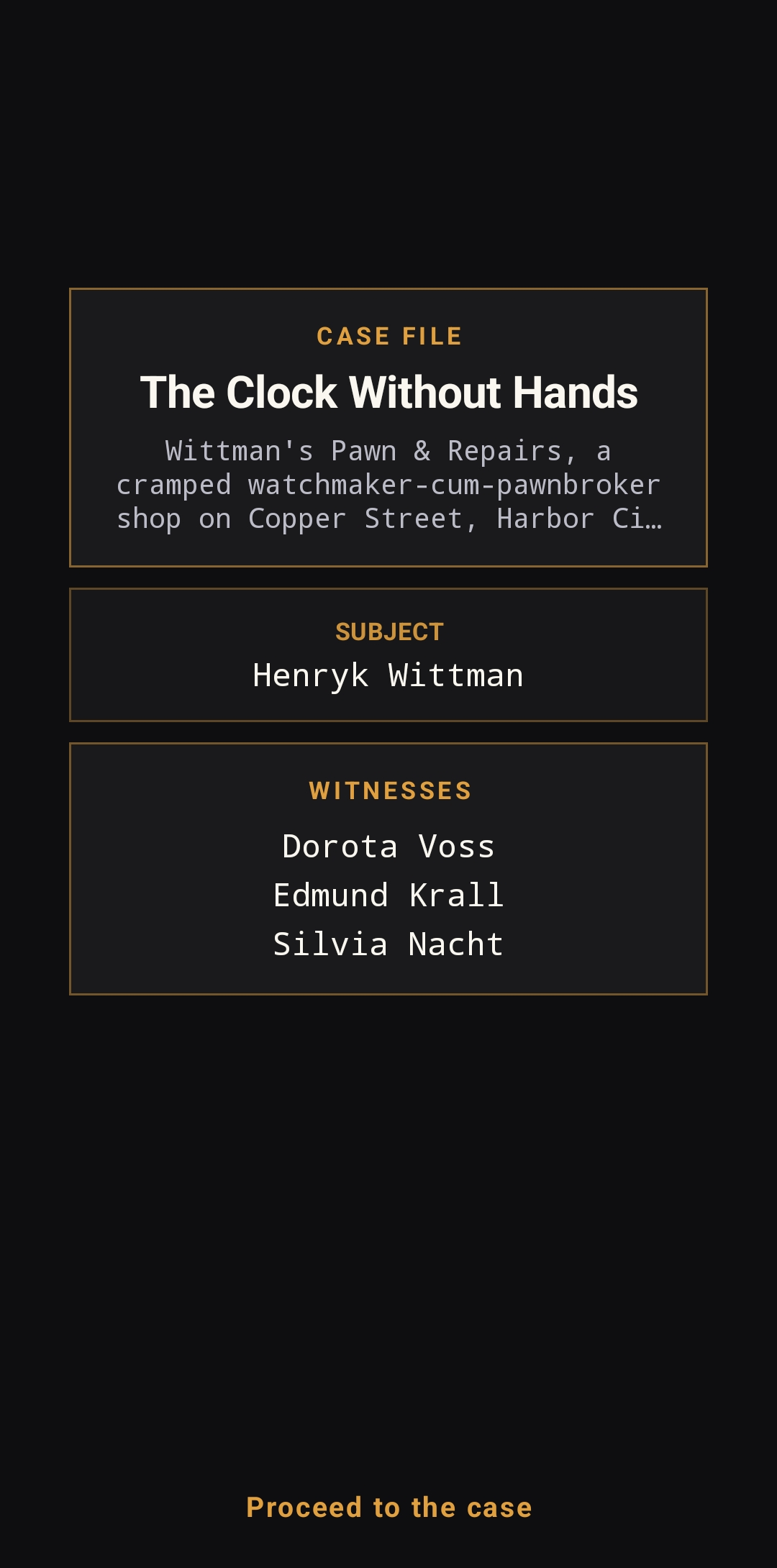
1. You get a file, not a script
Each case is a dossier with a setup, cast and question limit (often 15–22 depending on difficulty). You see who you can talk to and how many turns remain. There is no dialogue tree with three suggested replies — you decide what to ask.
2. You ask in your own words
Type on the keyboard or use the microphone (speech is converted to text on device; only the question text is sent). Questions can be short, emotional or detailed — like a detective talking to a suspect in a noir film.
3. Replies stay in character
The game plays the chosen person and answers in first person, within facts written into that case. A character does not magically know everything — only what their role in the story allows. Ask outside the file and the answer still belongs to the same story, but you do not get new evidence that was never in the dossier.
4. Turn limits matter
The question counter stays visible throughout. When the budget runs out you cannot keep grilling witnesses — you work with what you collected. That tension is deliberate: plan who to talk to and what to ask.
5. Scene examination is a separate turn
Interrogation is not your only tool. On an observation turn you say what to look at on the scene. You get a description of details (italicized in the app). Descriptions stay consistent with earlier findings — they extend the conversation, not a random prop list.
6. Verdict after accusation
At the end you name a suspect and write your reasoning. The game compares your conclusions to the file and returns a verdict on whether the accusation and evidence hold up. Weak reasoning can cost points or require a revision — exact rules appear in-app when you file charges.
Keep in mind
- This is fiction — characters and events are invented.
- Internet is required; responses are generated by AI (Google Gemini).
- The game is free, but AI queries have a daily limit.
- Interrogation applies to Story Detective — not Guess the Word or Dark Tales.